



The redesigned Mazda CX-5 is bigger, roomier and more connected than the model it replaces. In the United States, the 2026 CX-5 starts at a manufacturer-listed MSRP of $29,990 before a $1,595 destination charge. Every trim uses a 187-horsepower 2.5-liter gasoline engine, a six-speed automatic transmission and standard i-Activ all-wheel drive.
The headline improvements are meaningful: more rear-seat and cargo space, a standard 12.9-inch touchscreen, available 15.6-inch display, Google built-in and a broader suite of driver-assistance features. The tradeoff is equally clear. Mazda has dropped the turbocharged engine, and the EPA-estimated 24 city/30 highway/26 combined mpg is respectable rather than outstanding.
Key takeaways
- U.S. MSRP begins at $29,990, or $31,585 after Mazda’s listed $1,595 destination charge, before tax and registration.
- A 187-hp 2.5-liter four-cylinder, six-speed automatic and AWD are standard.
- EPA estimates are 24 mpg city, 30 highway and 26 combined.
- Cargo volume is approximately 34 cubic feet behind the rear seats and 67 cubic feet with them folded, according to Car and Driver’s published measurements.
- A 12.9-inch touchscreen is standard; a 15.6-inch display is available on the Premium Plus.
- The redesign is much more family-friendly, but there is no turbo option and no gasoline-model performance upgrade.
- Buyers focused on efficiency may want to compare hybrid rivals or monitor Mazda’s forthcoming CX-5 Hybrid.
Recent Updates on the 2026 Mazda CX-5
The 2026 model is not a minor facelift. It represents a generational redesign for the U.S. market, with changes to proportions, cabin packaging, infotainment and safety technology.
The most useful Mazda CX-5 updates include:
- A longer body and wheelbase that create more passenger room
- Wider-opening rear doors for easier access and child-seat loading
- More cargo capacity and a lower load floor
- Standard 12.9-inch touchscreen on most U.S. trims
- Available 15.6-inch touchscreen on Premium Plus
- Google built-in with Maps, Assistant and compatible Play Store apps
- A 10.25-inch digital gauge display
- New and expanded i-Activsense driver-assistance functions
- Standard front and rear parking sensors on the U.S. model
- A panoramic moonroof on upper trims
Mazda has also simplified the powertrain story. The old turbocharged option has disappeared, leaving one naturally aspirated 2.5-liter engine across the U.S. lineup. That makes the CX-5 easier to shop, but less appealing to drivers who valued the previous turbo model’s effortless passing power.
Mazda CX-5 specifications
| Specification | 2026 U.S.-market CX-5 |
|---|---|
| Body style | Five-passenger compact crossover SUV |
| Engine | 2.5-liter Skyactiv-G DOHC 16-valve four-cylinder |
| Output | 187 hp at 6,000 rpm |
| Torque | 186 lb-ft at 4,000 rpm |
| Transmission | Six-speed automatic |
| Drivetrain | Standard i-Activ AWD |
| Drive modes | Normal, Sport and Off-road via Mi-Drive |
| EPA fuel economy | 24 city / 30 highway / 26 combined mpg |
| Maximum towing capacity | 1,500 lb when properly equipped |
| Seating | Five |
| Cargo capacity | About 34 cu ft behind rear seats; 67 cu ft folded |
| Standard center screen | 12.9-inch touchscreen |
| Largest available screen | 15.6-inch touchscreen |
| Rear seat split | 40/20/40 |
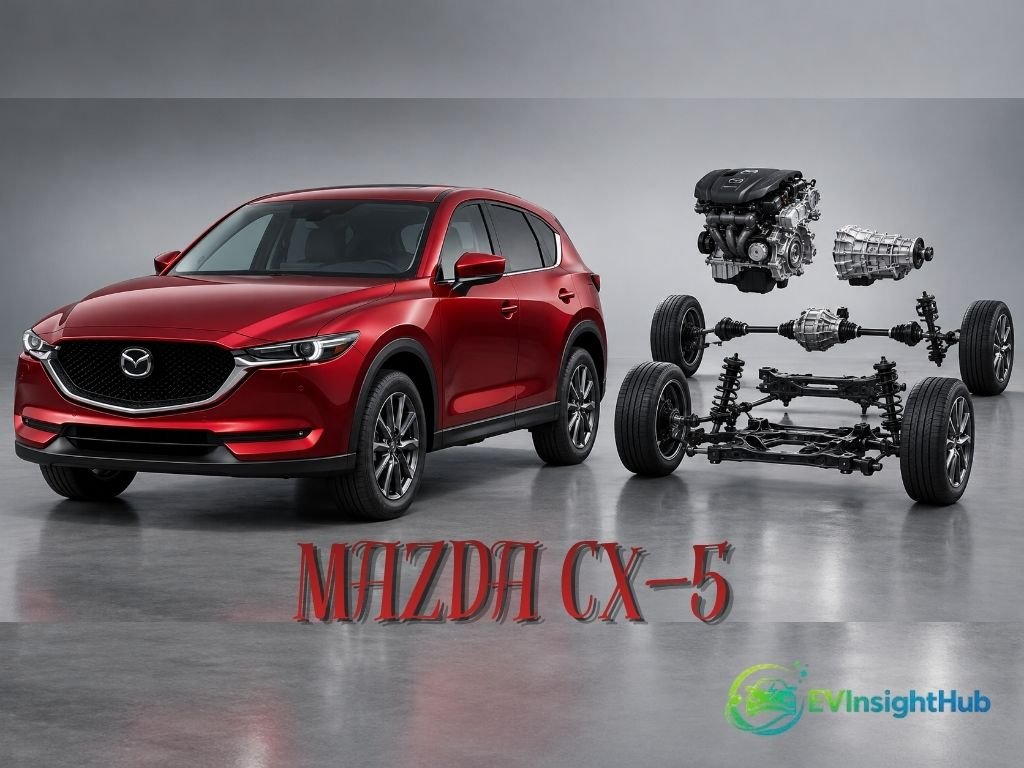
Mazda’s official U.S. page confirms the engine output, AWD system and EPA figures. Independent instrumented testing by Car and Driver recorded 0–60 mph in 8.0 seconds. That is adequate for a family crossover, but drivers should plan overtaking maneuvers rather than expect turbo-like acceleration.
Mazda CX-5 exterior: familiar identity, more road presence
The Mazda CX-5 exterior retains the brand’s restrained Kodo design language rather than chasing a boxy, off-road look. Its nose remains clean and recognizable, while slimmer lighting, smoother body surfacing and a stronger shoulder line make the redesigned SUV appear wider and more planted.

The larger proportions serve a practical purpose. The longer wheelbase allows Mazda to improve second-row legroom and cargo packaging without turning the CX-5 into a bulky three-row SUV. It remains a five-seater intended for urban driving and family use.
Wheel sizes vary by trim. The base 2.5 S uses 17-inch wheels, while Preferred and higher versions move to 19-inch designs. Larger wheels sharpen the appearance but can increase tire-replacement cost and may transmit more impact over broken pavement. Buyers who prioritize comfort and running costs should not automatically dismiss the base wheel package.
Navy Blue Mica joins Mazda’s color palette, while available premium paints and contrasting wheel finishes give upper trims a more expensive appearance. Color availability and surcharges vary by country.
Mazda CX-5 interior 2026: the biggest reason to upgrade
The Mazda CX-5 interior 2026 redesign focuses on space and digital controls. The dashboard is simpler and more horizontal, and the large central touchscreen becomes the visual centerpiece. Materials remain attractive, particularly on leather-equipped models, although independent reviewers have noted that some surfaces no longer feel as consistently upscale as those in the previous CX-5 or the CX-50.
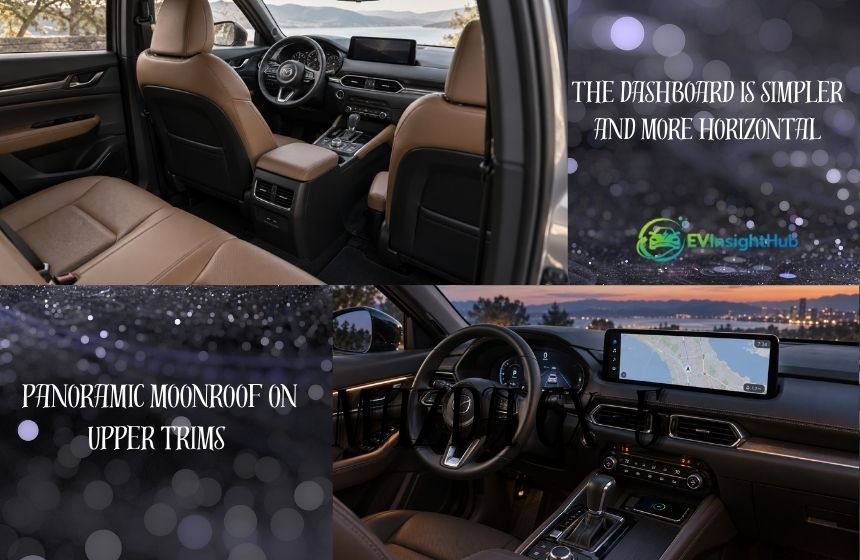
Seat upholstery progresses from cloth on the base model to leatherette and microsuede on Select, then leather on Premium and Premium Plus. Upper trims add power adjustment, memory settings, heated features and a Bose 12-speaker audio system.
The available panoramic moonroof brings light into both rows. It also adds cost and weight, so shoppers who seldom use a glass roof may prefer the less expensive Preferred trim.
One usability concern deserves a test drive: many climate and vehicle functions are now handled through the touchscreen. The large display looks modern, but drivers who prefer dedicated physical buttons may find the interface more distracting. Try common tasks—temperature changes, fan speed, camera view and audio selection—before choosing a trim.
Passenger room and Mazda CX-5 space
Space was a weakness of the previous model relative to the roomiest compact SUVs. The redesign addresses it directly.
Rear passengers receive improved knee- and legroom, and the rear doors open wider. Those details matter more in daily family use than a dramatic dashboard: fitting a rear-facing child seat, helping an older passenger enter or loading school bags becomes easier.
The cargo bay provides roughly 34 cubic feet behind the back seat and 67 cubic feet with the 40/20/40 backrests folded. The split arrangement is especially useful because the narrow center section can carry skis or long items while retaining two rear passenger positions.
The CX-5 still has only two seating rows. Shoppers needing seven seats should look at a larger vehicle such as the Mazda CX-90 rather than expect an occasional third row.
Mazda CX 5 technology and connectivity
Mazda CX 5 Technology is substantially more competitive for 2026. The standard 12.9-inch touchscreen includes Google built-in through a one-year Mazda Connected Services trial. Google Maps can serve as the primary navigation system, Google Assistant supports voice commands, and compatible apps are available through Google Play.
Wireless Apple CarPlay and Android Auto are included from the Select trim upward; availability on the base trim should be checked in the local equipment sheet. A 10.25-inch digital instrument cluster displays speed, range, cruise settings and safety warnings.
Premium Plus adds the 15.6-inch touchscreen, hands-free liftgate and Cruising and Traffic Support with Lane Change Assist. Premium adds the 12-speaker Bose system and panoramic moonroof.
Connected features are not necessarily free for the life of the vehicle. Mazda states that Google built-in and selected connected services begin with a one-year trial. Buyers should ask the dealer which functions require a subscription after the trial and what they cost in their country.
Independent testing also raises a caution. Car and Driver reported infotainment glitches and a frozen display in its long-term vehicle. Software updates may improve this, but shoppers should check the system version and test phone pairing, navigation and camera functions during delivery.
Engine, performance and driving experience
The naturally aspirated engine delivers power smoothly, and the conventional six-speed automatic avoids the droning sensation some drivers associate with continuously variable transmissions. Standard AWD is valuable in rain, snow and on loose surfaces, while Mi-Drive offers Normal, Sport and Off-road settings.
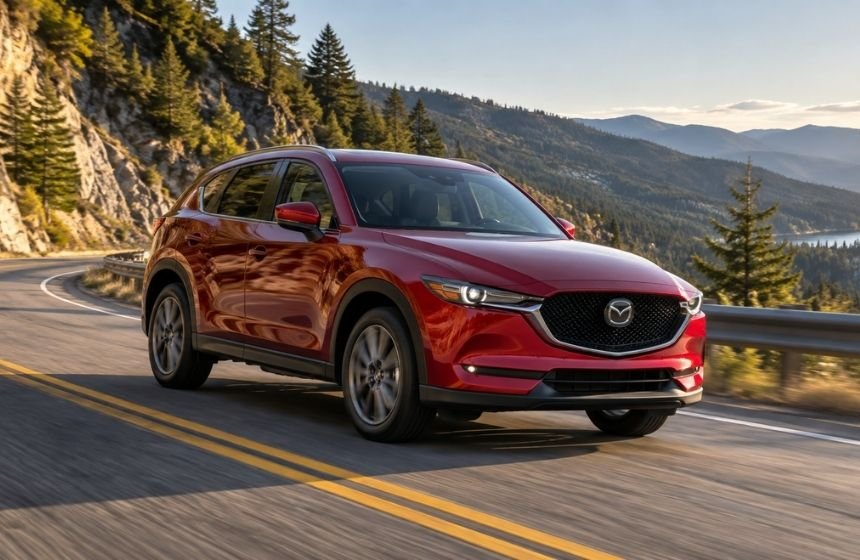
The CX-5’s strength is balance rather than speed. Steering response and body control remain more engaging than in many family crossovers, while suspension tuning keeps the ride composed. Car and Driver’s 8.0-second 0–60-mph result confirms that performance is competitive with nonhybrid rivals, not genuinely quick.
The deleted turbo is the biggest disappointment for enthusiastic drivers. Anyone wanting stronger acceleration should compare the turbocharged Mazda CX-50 or wait to see final specifications and pricing for the forthcoming CX-5 Hybrid.
Fuel economy and ownership considerations
EPA estimates for the gasoline AWD model are 24 mpg city, 30 highway and 26 combined. Real-world consumption will depend on temperature, traffic, tires, load and driving style.
Those numbers place the CX-5 behind the most efficient hybrid compact SUVs. The Mazda may still suit buyers who value conventional powertrain behavior, standard AWD and steering feel, but high-mileage drivers should compare annual fuel costs rather than purchase price alone.
The U.S. warranty comprises three years/36,000 miles of limited coverage and five years/60,000 miles for the powertrain. Complimentary scheduled maintenance is not included nationally. Insurance, tire costs and service prices vary, so obtain local quotes before choosing between 17- and 19-inch-wheel trims.
Safety and driver assistance
Mazda equips the CX-5 with a broad i-Activsense package. Depending on trim and market, key features include:
- Automatic emergency braking
- Adaptive cruise control
- Blind Spot Monitoring
- Lane-keeping and road-departure assistance
- Head-on Traffic Avoidance
- Vehicle Exit Warning
- Rear Cross Traffic Alert
- Smart Brake Support–Rear Crossing
- Front and rear parking sensors
- Available 360-degree camera with see-through views
Mazda says the 2026 CX-5 earned a 2026 IIHS Top Safety Pick+ award. Driver-assistance systems remain aids, not substitutes for attentive driving; weather, road markings and sensor obstruction can limit their operation.
Mazda CX-5 price by country
International prices cannot be converted directly because taxes, freight, standard equipment, warranties and model-year timing differ.
| Market | Published price checked | Important context |
|---|---|---|
| United States | From US$29,990 MSRP | Excludes $1,595 destination, tax, title and registration. Effective starting cost before tax is $31,585. |
| Canada | Dealer-advertised GX from about C$38,390 | Retail listings may include freight/PDI or incentives; province, paint and dealer charges change the final price. Confirm with Mazda Canada’s builder. |
| United Kingdom | From £31,550 OTR | Mazda UK’s current all-new CX-5 figure includes VAT, delivery, registration-related items and the applicable warranty package. UK powertrain/equipment can differ from North America. |
| India | Not officially priced | Mazda does not currently list the CX-5 through an official Indian passenger-car sales network. Treat unofficial launch-price estimates as speculation. |
Disclaimer: Information verified as of September 18, 2026. Prices and features can change by market and trim.
U.S. trim prices
| Trim | Starting MSRP before destination |
|---|---|
| 2.5 S | $29,990 |
| 2.5 S Select | $31,990 |
| 2.5 S Preferred | $34,250 |
| 2.5 S Premium | $36,900 |
| 2.5 S Premium Plus | $38,990 |
For apples-to-apples shopping, add Mazda’s $1,595 destination charge to every U.S. trim before comparing it with a rival’s destination-inclusive figure.
Which Mazda CX-5 trim should you buy?
The 2.5 S Select is likely the value choice for many buyers. It adds leatherette/microsuede upholstery, wireless phone integration and heated power-folding mirrors without pushing the price into premium territory.
Choose the Preferred if power-seat memory, 19-inch wheels and a programmable liftgate matter. The Premium is the comfort upgrade, adding leather, panoramic moonroof and Bose audio. The Premium Plus is for buyers who specifically want the 15.6-inch display, hands-free liftgate and most advanced assistance features.
The base 2.5 S is not a stripped fleet model: it retains AWD, the 187-hp engine, Google built-in and a 12.9-inch screen. Its 17-inch tires may also be cheaper to replace.
Review: strengths and weaknesses
What the CX-5 does well
- Handsome, mature exterior design
- Significantly better rear-seat and cargo usability
- Standard AWD across the U.S. range
- Predictable six-speed automatic
- Composed ride and responsive handling
- Large standard touchscreen and integrated Google services
- Strong standard safety equipment
- Competitive base MSRP once equipment is considered
Where it falls short
- No turbocharged gasoline option
- Fuel economy trails leading hybrids
- Touchscreen dependence may frustrate some drivers
- Upper trims approach prices of quicker or more efficient alternatives
- Google and connected-service trials can lead to later subscription costs
- No third row
Mazda CX-5 vs CX-50, RAV4 and CR-V
The CX-50 is the closest in-house alternative. It has a more rugged personality, offers turbo and hybrid powertrains, and can tow more in the right configuration. The CX-5 counters with a more comfort-oriented cabin and conventional urban-SUV shape.
The Toyota RAV4 and Honda CR-V offer strong hybrid choices and broad dealer networks. Buyers who cover many miles should compare real annual fuel costs. The CX-5’s advantage is its combination of standard AWD, clean styling and driver engagement; its disadvantage is the absence of a gasoline-hybrid choice at the time covered by this review.
The Subaru Forester emphasizes visibility, practicality and standard AWD. The Mazda feels more design-led, while the Subaru may appeal more to buyers prioritizing a square cargo area and outdoors-oriented packaging.
Final verdict
The redesigned Mazda CX-5 is worth considering if you want a refined five-seat SUV with standard AWD, useful cargo space, confident handling and contemporary technology. The Select and Preferred trims offer the strongest balance of price and equipment. It is less compelling for buyers who want brisk turbo performance, maximum fuel economy or physical controls for every cabin function. In those cases, compare the CX-50 Turbo, a hybrid rival or the upcoming CX-5 Hybrid before committing.
The best test drive brings the child seat, pair your phone, operate the climate system, load the cargo area and drive on both city streets and a highway entrance. If the engine feels sufficient and the touchscreen works naturally for you, the new CX-5’s extra space makes it a much easier family recommendation than before.
Save or share this guide with someone comparing compact SUVs, and explore EVInsightHub’s other vehicle guides before building your final shortlist.

