


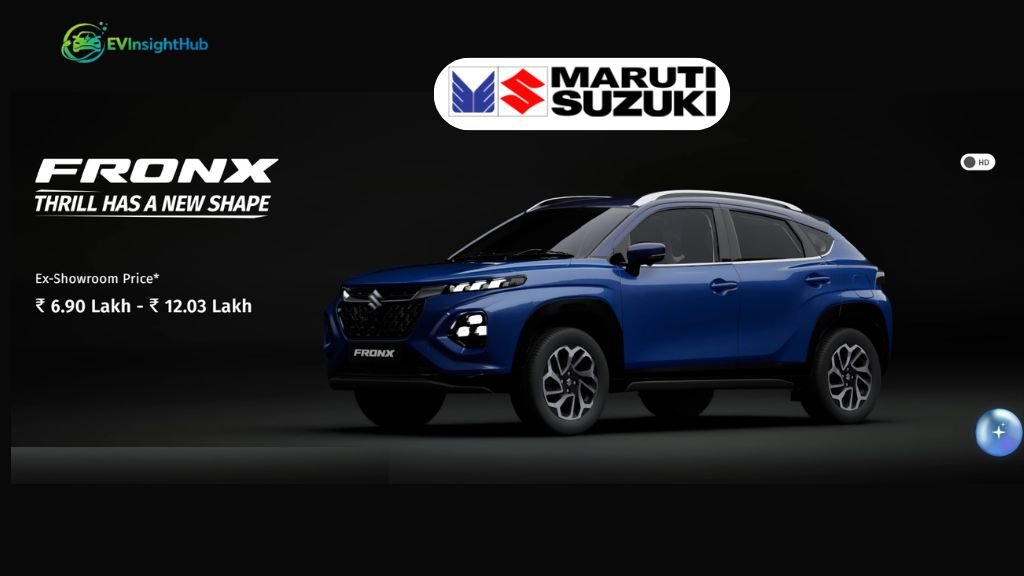
The Maruti Suzuki Fronx is a five-seat compact crossover sold through NEXA in India. Its coupe-inspired styling makes it easy to recognize, but the more important choice sits beneath the bodywork: regular petrol, turbo-petrol, or factory-fitted CNG. Each suits a different set of priorities.
For buyers comparing the Fronx price, mileage, and features, start with the engine and gearbox you need. Then choose the trim. That order helps avoid paying for equipment you rarely use—or buying the wrong powertrain because the showroom car looked appealing. To explore the wider lineup other than Maruti Suzuki Fronx, see our Maruti Suzuki cars and brand guide, covering hatchbacks, SUVs, hybrids, and electric vehicles.
Information verified as of November 1, 2026. Indian specifications and Delhi price references are used unless stated otherwise. This is a researched buying guide, not a firsthand road test.
Maruti Suzuki Fronx Overview
| Item | Indian-model information |
|---|---|
| Seating | Five |
| Length × width × height | 3,995 × 1,765 × 1,550 mm |
| Wheelbase | 2,520 mm |
| Petrol boot capacity | 308 liters |
| Turning radius | 4.9 meters |
| Sales channel | NEXA |
Source: current official Indian Fronx brochure and NEXA model page. The quoted boot volume is not established for the CNG version.
Key takeaways
- The 1.2 petrol and turbo-petrol automatics use different gearbox types.
- The current Indian lineup lists CNG with a manual gearbox.
- Certified mileage figures are comparison tools, not guaranteed everyday results.
- Confirm the chosen variant’s equipment and the final on-road quotation before booking.
Source context: NEXA’s Indian powertrain listing and brochure.
About Maruti Suzuki and the Fronx
Maruti Suzuki India Limited is a subsidiary of Japan’s Suzuki Motor Corporation. It was previously known as Maruti Udyog Limited; incorporation dates to February 1981, while vehicle operations began in 1983. Arena and NEXA are its passenger-car sales channels, and Fronx belongs to NEXA.
Sources: Maruti Suzuki’s official business overview, historical production release, and current model directory.
For a Fronx buyer, the useful brand checks are local: workshop access, the maintenance schedule, warranty terms, and the dealer’s written commitments. The badge alone cannot tell you whether a particular engine, transmission, or trim matches your needs.
Maruti Suzuki Fronx price in India
NEXA’s Delhi page provides the following price references. These are vehicle-price figures before the final registration, insurance, and other applicable charges; they should not be read as complete on-road quotes.
| Configuration | Official Delhi price reference |
|---|---|
| Sigma MT base model | ₹6,89,900 |
| CNG range: Sigma MT to Delta MT | ₹7,93,900–₹8,73,900 |
| Automatic range: Delta AMT to Alpha AT | ₹8,24,900–₹11,88,900 |
| Alpha AT listed top-trim reference | ₹11,88,900 |
Source: official NEXA Fronx Delhi pricing page, checked November 1, 2026. Confirm paint, dual-tone charges, selected equipment, offers, and invoice-date pricing separately. This is a price overview, not every variant’s price list.
Fronx on-road price: what changes by city?
Your final Fronx on-road price depends on the exact configuration and applicable registration, road tax, insurance, and other charges. Financing and optional accessories can also change what you pay.
Ask for a quotation that separates the vehicle, required charges, and optional items. A cheaper insurance line may provide different coverage, while an attractive monthly installment may hide a longer loan term. Compare equivalent terms rather than only the final monthly number.
Fronx engines: petrol, turbo, and CNG
| Powertrain | Capacity | Maximum output | Maximum torque | Gearbox choices |
|---|---|---|---|---|
| Regular petrol | 1,197 cc | 66 kW | 113 Nm | Five-speed manual or five-speed AGS/AMT |
| Turbo-petrol | 998 cc | 73.6 kW | 147.6 Nm | Five-speed manual or six-speed automatic |
| CNG, in CNG mode | 1,197 cc | 57 kW | 98.5 Nm | Five-speed manual |
Source: official Indian brochure technical table. CNG-mode figures differ from petrol-mode figures for the dual-fuel version.
Choose the regular petrol route for a simpler shortlist
The 1.2 petrol deserves an early test drive if your main requirements are daily commuting and a purchase price within a clear budget. Compare its manual and AGS versions on the same route rather than assuming that two-pedal convenience settles every part of the decision.
Try slow traffic, a parking maneuver, and an incline. Notice the response when you ask for acceleration and whether you are comfortable with the gearbox’s behavior.
Consider the turbo when its extra performance matters to you
The turbo produces more torque, but whether that is worth the added expenditure depends on how you drive. If you regularly travel with passengers or use faster roads, include a fully loaded test drive where practical.
A larger torque figure isn’t permission for a risky overtake. Assess visibility, response, and how comfortable you feel with the vehicle rather than treating a specification as a substitute for judgment.
Choose CNG after checking the refueling routine
CNG can be relevant to a buyer with substantial regular travel, convenient stations, and a plan to retain the car long enough to justify the purchase-price difference. It is less compelling if refueling requires frequent detours or long queues.
Inspect the luggage area with your own bags. The petrol boot figure doesn’t describe the space left after CNG equipment is installed. Also check the exact maintenance requirements and the warranty documentation supplied with the car.
Fronx automatic: AGS and six-speed AT are different
The regular petrol’s AGS is an automated manual transmission. The turbo’s six-speed automatic is a separate gearbox option, with paddle shifters on applicable versions. NEXA lists both under automatic choices, but they should not be treated as identical configurations.
Sources: current Indian NEXA powertrain listing and the original official Fronx launch announcement.
Build two comparisons: manual versus automatic within your preferred engine, then the equipment difference between the specific trims. Comparing an entry AGS with a higher turbo AT mixes transmission, performance, and feature changes into one price jump.
Maruti Suzuki Fronx mileage
| Version | Manufacturer-certified efficiency |
|---|---|
| 1.2 petrol manual | 21.79 km/l |
| 1.2 petrol AGS | 22.89 km/l |
| Turbo-petrol manual | 21.50 km/l |
| Turbo-petrol automatic | 20.01 km/l |
| CNG manual | 28.51 km/kg |
Source: official Indian brochure, certified test figures. Petrol kilometers per liter and CNG kilometers per kilogram use different units.
For a fair cost comparison, divide your local fuel price by realistic consumption for your own route. Include petrol use for the CNG version where relevant. Then compare the purchase-price premium, maintenance, and refueling time across your expected ownership period.
The variant with the highest certified mileage does not automatically become the least expensive car for a low-mileage owner.
Is the Fronx a strong hybrid or an electric car?
The Indian turbo-petrol Fronx uses Smart Hybrid assistance. Maruti’s explainer describes functions including energy recovery and engine assistance. This is different from the electric-driving capability of a strong-hybrid system and from a battery-electric vehicle.
Source: Maruti Suzuki’s Smart Hybrid technology documentation and Indian Fronx launch information.
No confirmed new Indian strong-hybrid Fronx launch was established in this research. If you find a future-model headline, check the dated official announcement before treating it as a vehicle you can order today.
Fronx features and cabin practicality
NEXA’s Indian materials show available equipment including a head-up display, surround-view camera, wireless phone charging, and touchscreen smartphone connectivity. These are variant-dependent features, not a promise that every Fronx includes them.
Source: NEXA’s Fronx product page and official launch announcement.
Make a list of the equipment you will use weekly. Parking assistance may be useful in a tight apartment space; rear-seat comfort may matter more to a family than a decorative accessory package. Ask the salesperson to demonstrate the feature on the actual trim you are considering.
Check headroom, rear visibility, entry and exit, and the luggage opening. The sloping roofline is part of the car’s appeal, but a showroom visit should establish whether its shape suits your passengers and belongings.
Fronx safety: equipment and crash ratings are different
The current Indian brochure lists six airbags as standard, alongside stability control, hill-hold assistance, and ISOFIX child-seat anchorages. Check the equipment and build specification of the car offered to you, particularly when comparing older inventory or used vehicles.
Source: current official Indian brochure and NEXA safety section.
This guide does not assign a crash-test star rating: an applicable current Indian-market assessment was not verified. Equipment lists and regulatory impact compliance are not interchangeable with an independently published NCAP score. Likewise, a result or feature from an overseas Fronx should not automatically be attached to the Indian car.
Latest Fronx context and global-market differences
Maruti Suzuki’s September 14, 2026 announcement reported that combined exports of the Fronx, Jimny five-door, and e VITARA to Japan had exceeded 100,000 units. That is a combined three-model milestone, not a Fronx-only sales total.
Source: official Maruti Suzuki Japan-export announcement.
The development shows the model’s international role, but global reach doesn’t mean identical specifications. The supplied Global Suzuki reference explicitly states that it shows Latin American specification. Use Indian NEXA documentation for an Indian purchase rather than importing overseas engine or feature claims.
Which Fronx configuration should you shortlist?
EVInsightHub‘s editorial approach is to choose by use case rather than declaring one universal “best variant.”
| Your priority | Start by comparing | Before deciding |
|---|---|---|
| Controlled purchase budget | Regular petrol manual trims | Essential equipment and final quote |
| Two-pedal commuting | Regular petrol AGS | Gear changes in slow traffic and parking |
| Extra performance | Turbo manual or automatic | Response with passengers and total cost |
| High regular mileage | CNG manual | Fuel access, luggage needs, and break-even distance |
| More convenience equipment | Higher trims | Whether the additional features justify the premium |
Save this table before your test drive. Compare the same route, passengers, and must-have features across your shortlist, then obtain a written quote. Share the guide with anyone helping you choose so you’re discussing the same configuration rather than just the Fronx badge.
FAQs About Maruti Suzuki Fronx
What is the Maruti Suzuki Fronx base-model price?
NEXA’s Delhi page lists Sigma MT from ₹6,89,900 as checked November 1, 2026. Registration, insurance, and other applicable charges are additional; confirm the final local quotation.
Is the Fronx CNG available with an automatic gearbox?
The current Indian NEXA lineup lists CNG versions with a manual gearbox. Do not apply automatic-CNG announcements for other Maruti models to the Fronx without a model-specific confirmation.
What is the difference between Fronx AGS and AT?
AGS is the automated manual option paired with the regular petrol engine. The turbo-petrol uses a different six-speed automatic option. Compare the exact engine and trim rather than grouping every automatic Fronx together.
Is the Fronx a seven-seater?
No. The official Indian brochure identifies it as a five-seat vehicle.
Does the Fronx have a sunroof or ADAS?
A sunroof or ADAS package was not established in the Indian materials checked for this guide. Do not assume overseas features, concept images, or future-model reports apply to a locally offered car; confirm the exact current equipment list.
Is this a road-test review?
No. This is a source-checked buying guide. EVInsightHub has not claimed firsthand driving impressions, independently measured mileage, or crash-test results in this article.

