


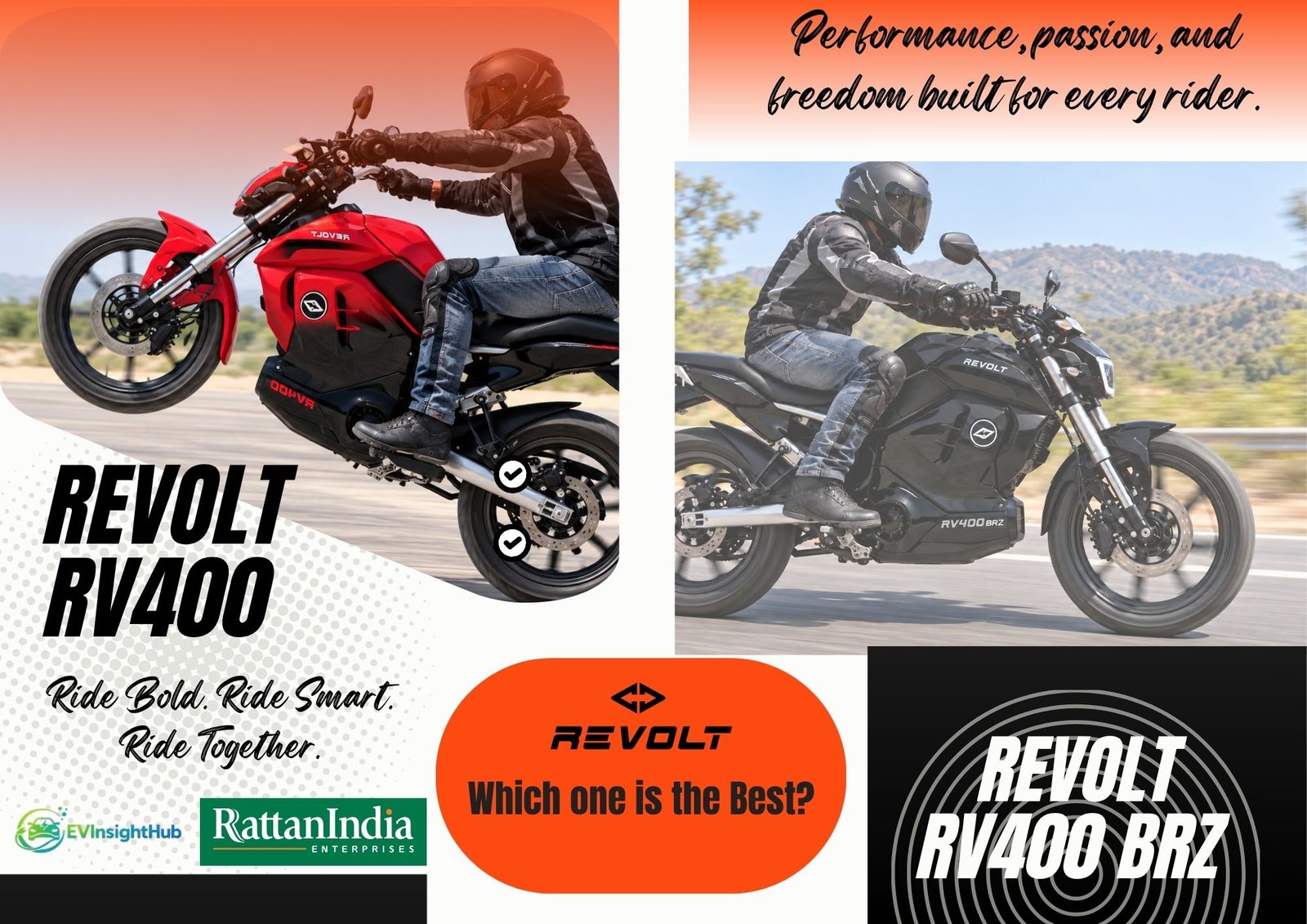
Thinking about an electric motorcycle for your daily commute? Then the Revolt RV400 vs RV400 BRZ debate is probably on your list. Both bikes share the same sporty streetfighter look, the same 3.24 kWh removable battery and the same claimed 150 km IDC range. So what separates them? Mostly price and smart features.
The RV400 is the connected, tech-loaded version. It works with the MyRevolt app, live tracking and geofencing. The RV400 BRZ, on the other hand, keeps the core hardware and drops most of the app-based extras. In return, it saves you ₹10,000.
In this guide, we compare the Revolt RV400 and RV400 BRZ on price, motor, range, charging, hardware, features, safety and warranty. All figures are updated as of October 2026, so you can decide which one fits your budget and riding style.
Revolt RV400 vs RV400 BRZ: Key Differences
| Parameter | Revolt RV400 | Revolt RV400 BRZ |
|---|---|---|
| Ex-showroom price | ₹1,39,950 | ₹1,29,950 |
| Battery | 3.24 kWh, removable | 3.24 kWh, removable |
| Claimed IDC range | 150 km | 150 km |
| Top speed | 85 km/h | 85 km/h |
| Instrument display | 6-inch digital | 6-inch digital |
| MyRevolt app connectivity | Yes | Not listed officially |
| GPS tracking and geofencing | Yes | Not listed officially |
| Reverse mode | Yes | Yes |
| Best for | Tech-smart riders | Budget-focused commuters |
Company Overview: Revolt Motors
Revolt Motors is an Indian electric two-wheeler brand, now part of the RattanIndia group. It builds electric motorcycles that look and feel like regular street bikes, rather than scooters. As of October 2026, its line-up includes the RV1, RV1+, RV BlazeX, RVX, RV400 and RV400 BRZ. Indian cricketer Hardik Pandya is the brand ambassador of Revolt.

The Revolt RV400 started it all. It launched on 28 August 2019 as one of India’s first AI-enabled electric motorcycles. Later, the RV400 BRZ arrived in January 2024 as a more affordable version of the same bike. Since then, both models have received a 6-inch display, reverse mode and new colours.
| Details | Revolt RV400 | Revolt RV400 BRZ |
|---|---|---|
| Launch in India | 28 August 2019 | 23 January 2024 |
| Category | Electric motorcycle | Electric motorcycle |
| Revolt’s positioning | Smart Sports Bike | Core Sports Bike |
| Main highlight | Connected technology | Value for money |
| Target buyer | Riders who want app features | Budget-conscious commuters |
Revolt RV400 vs RV400 BRZ Price in India (2026)
Revolt sells both bikes in a single standard variant. According to Revolt’s website, the RV400 price is ₹1,39,950 and the RV400 BRZ price is ₹1,29,950, ex-showroom. That makes the BRZ exactly ₹10,000 cheaper.
However, the on-road price will be higher. It depends on your city, RTO charges, insurance and dealer handling fees. For example, the BRZ costs roughly ₹1.35 lakh to ₹1.38 lakh on-road in major metros, according to BikeDekho.
| Model | Variant | Ex-showroom Price | Approx. On-road (Delhi) |
|---|---|---|---|
| Revolt RV400 | Standard | ₹1,39,950 | ₹1.46 lakh |
| Revolt RV400 BRZ | Standard | ₹1,29,950 | ₹1.35 lakh |
Note: Revolt’s own RV400 page also shows ₹1,44,950 in one FAQ. Meanwhile, PM E-Drive subsidy eligibility and festive offers keep changing. So always ask your dealer for a written, itemised quote before you book.
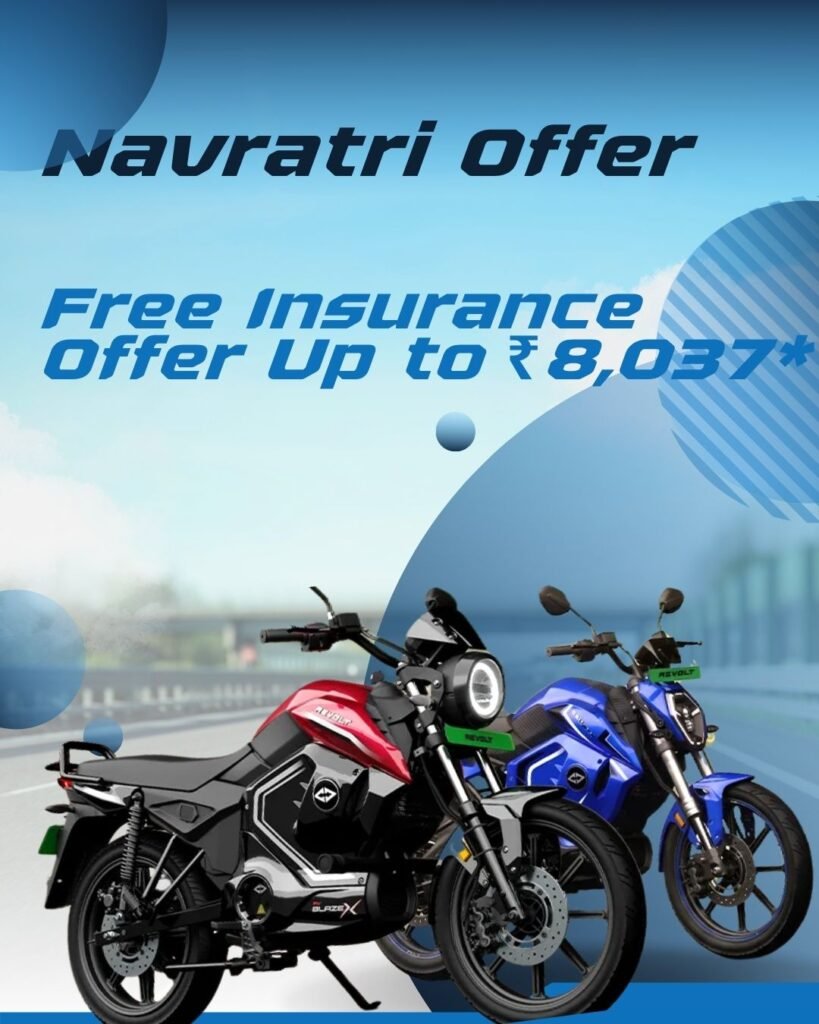
Free Insurance and Extra Saving with Revolt Navratri Offer 2026
| Model | Free Insurance (Rest of India) | Free Insurance (Kerala) |
|---|---|---|
| Revolt RV400 | Up to ₹7,150 | Up to ₹8,631 |
| Revolt RV400 BRZ | Up to ₹6,984 | Up to ₹8,394 |
*Condition may apply.
Want the full breakdown of the standard model? Read our detailed Revolt RV400 review and specifications guide.
Motor, Performance and Top Speed
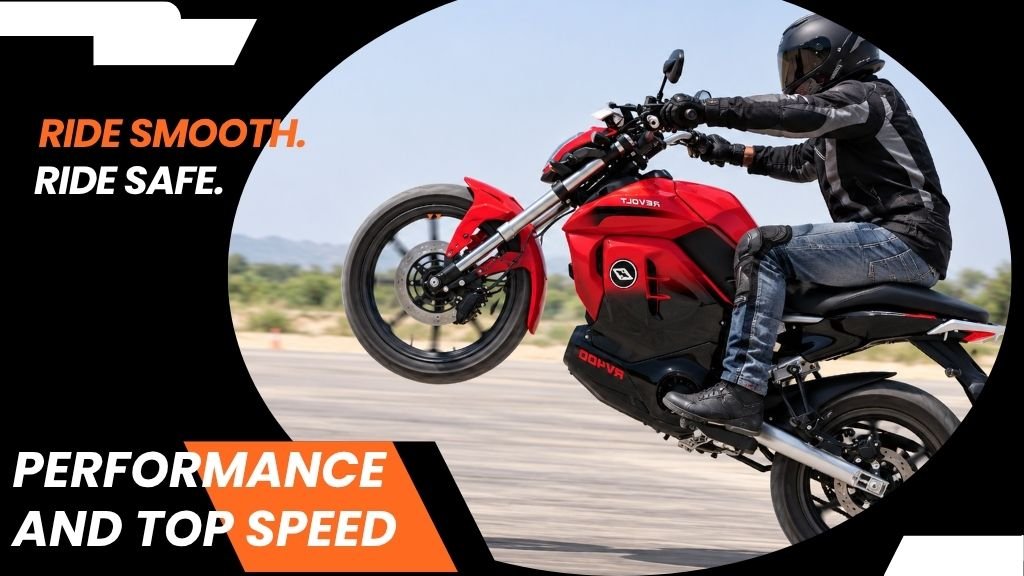
Under the skin, the two bikes are identical. Both use a mid-mounted electric motor that drives the rear wheel through a belt. It is rated at 3 kW and peaks at about 4.1 kW, with 45 Nm of motor torque. As a result, both bikes pull cleanly from a standstill, which is exactly what you need in city traffic.
There is no clutch and no gear lever. Instead, you twist and go. You also get three riding modes (Eco, Normal and Sport) plus a reverse mode, which makes parking a 115 kg bike much easier.
| Specification | Revolt RV400 | Revolt RV400 BRZ |
|---|---|---|
| Motor type | Mid-drive, belt drive | Mid-drive, belt drive |
| Rated / peak power | 3 kW / 4.1 kW | 3 kW / 4.1 kW |
| Motor torque | 45 Nm | 45 Nm |
| Transmission | Automatic, clutch-free | Automatic, clutch-free |
| Riding modes | Eco, Normal, Sport | Eco, Normal, Sport |
| Reverse mode | Yes | Yes |
| Claimed top speed | 85 km/h | 85 km/h |
| Kerb weight | 115 kg | 115 kg |
Revolt has not published official 0–40 km/h figures for either model. Still, since the hardware is shared, real-world acceleration should feel the same on both.
Battery, Range and Charging Time
Both RV400 and RV400 BRZ are powered by the same 3.24 kWh Lithium-ion Battery. Even better, it is removable, so that you can take it to your flat and plug it into a standard wall socket.
Revolt states both have 150km of IDC range. In reality however, range is dependent upon the riding mode. The spec sheets provided by third parties give figures of approximately 150 km in Eco mode, 100 km in Normal and 80 km in Sport. It will also be influenced by speed, the weight of the rider, traffic and battery age. For the majority of commuters 80–110 km per charge is a realistic figure.
| Battery and Charging | Revolt RV400 | Revolt RV400 BRZ |
|---|---|---|
| Battery | 3.24 kWh lithium-ion | 3.24 kWh lithium-ion |
| Removable battery | Yes | Yes |
| Claimed IDC range | 150 km | 150 km |
| Mode-wise range (approx.) | 150 / 100 / 80 km | 150 / 100 / 80 km |
| Standard charging (0–80%) | About 3 hr 30 min | About 3 hr 30 min |
| Standard charging (0–100%) | About 4 hr 30 min | About 4 hr 30 min |
| Fast charging (0–80%) | About 80 min | About 80 min |
Running Cost Per Kilometre
That’s the place electric powered motorcycles come into play. A complete charge is approximately 3.5 units of electricity (losses can be accepted). The price is approximately ₹28 with each unit priced at about ₹8. The average cost of a 100 km journey on the same is approximately ₹0.30 per km while a 125cc petrol bike would cost around ₹2 per km on a real life 100 km journey. So you could save roughly ₹2,500–₹3,000 a month if you ride 50 km a day.
Suspension, Brakes and Hardware
The chassis, cycle parts, are the same on both bikes. The front is equipped with bumps controlled by upside down forks (USD) and an adjustable monoshock is installed to control the rear bumps. Also, they have 240 mm brakes at both ends, which are connected via a combined braking system (CBS). Both of them are not equipped with ABS.
Both are capable of handling the broken city roads and speed breakers and with around 200mm of ground clearance. However, the latter are designed for city commuters and not off-road trails.
| Hardware | Revolt RV400 | Revolt RV400 BRZ |
|---|---|---|
| Front suspension | USD forks | USD forks |
| Rear suspension | Adjustable monoshock | Adjustable monoshock |
| Brakes (front / rear) | 240 mm disc / 240 mm disc | 240 mm disc / 240 mm disc |
| Braking system | CBS (no ABS) | CBS (no ABS) |
| Wheels | 17-inch alloy | 17-inch alloy |
| Tyres | Tubeless, 90/80 front, 110/80 rear | Tubeless, 90/80 front, 110/80 rear |
| Ground clearance | About 200 mm | About 200 mm |
Features and Technology
The differences between the two bikes are the greatest one. The RV400 is equipped with the MyRevolt app, making your phone the remote control of your bike. Using it, you can swipe to start the bike and view real-time battery and range information. It also provides real-time location, geofencing alerts, ride history and SOS contacts. You can choose an individual exhaust sound!
The RV400 BRZ is quite different though, with a more fundamental approach. It isn’t mentioned on its BRZ page but you should consider the BRZ as a non-connected bike.
| Feature | Revolt RV400 | Revolt RV400 BRZ |
|---|---|---|
| 6-inch digital display | Yes | Yes |
| Riding modes and reverse mode | Yes | Yes |
| MyRevolt app connectivity | Yes | Not listed |
| Real-time location and geofencing | Yes | Not listed |
| Keyless / remote operation | Yes | Not listed |
| Custom sound profiles | Yes | No |
| SOS and emergency contacts | Yes | Not listed |
| Full LED lighting | Yes | Yes |
Design and Colour Options
Appearance-wise, both bikes can be easily confused with each other. All of them feature the same concept of a naked streetfighter design, LED headlamp, sculpted dummy tank and split seat. So, the primary difference in the visual is the hues used.
- The RV400 colours are Eclipse Red and Cosmic Black (black) as well as Mist Grey and India Blue.
- The RV400 BRZ is available in four different colours: Cosmic Black, Dark Silver, Pacific Blue and Rebel Red.
Safety Features
The safety gear is shared by both bicycles. They come with all-LED lighting, tubeless tires, a side-stand alert and front/rear disc brakes with CBS. Despite this, neither of the bikes has ABS or traction control. The RV400 offers one thing to improve the security of the bike: live GPS tracking and geofencing can help you find the stolen bike.
Ride and Handling
The seat height of 815mm is for most of the Indian riders. Further, both bikes are light at the kerb (115 kg) and have a 1,350 mm wheelbase from which they are both quick to handle in traffic. The riding position will be straight and relaxed for 20–40 km of riding each day. Some owners don’t like the rear suspension firm on poor roads, however, try your regular driving track to see if it’s firm.
| Parameter | Revolt RV400 | Revolt RV400 BRZ |
|---|---|---|
| Seat height | 815 mm | 815 mm |
| Wheelbase | 1,350 mm | 1,350 mm |
| Kerb weight | 115 kg | 115 kg |
| Best suited to | City commuting | City commuting |
Warranty and Ownership
Revolt has now covered both bikes with a good warranty. The car’s official model pages state that the car will be covered for 5 years and 60,000 km. The battery can be used for 8 years or 80,000 km. However, some dealer and aggregator listings still list the terms you can find in the dealer’s warranty card, so be sure to check this before signing.
One more: The service network of Revolt is smaller than those of petrol bike brands. There are delays in provision of services and spares reported by some owners. So, find out if there is an authorized Revolt service center near you.
Revolt RV400 vs RV400 BRZ vs Rivals
The Electric Motorcycle Market has been growing rapidly. Because of that, there are a number of options now available which will fall into the same price range, both from within and beyond Revolt’s lineup.
| Model | Approx. Ex-showroom Price | Why Consider It |
|---|---|---|
| Revolt RV400 BRZ | ₹1,29,950 | Lowest-cost way into the RV400 platform |
| Revolt RV400 | ₹1,39,950 | Full app connectivity and tracking |
| Revolt RVX | ₹1,39,990 | More power and Boost mode, same 3.24 kWh battery |
| Ola Roadster X+ | About ₹1.04 lakh | Bigger battery for the money |
| Oben Rorr Evo | ₹99,999 (introductory); ₹1.25 lakh after | Claimed 180 km IDC range, 110 km/h top speed, LFP battery |
| Matter Aera | About ₹1.5 lakh+ | Geared electric bike with a manual gearbox |
Prices vary by city and offer, so treat these as indicative.
Important Things to Check Before Buying
- Get the on-road price in writing. Ask for an itemised quote covering insurance, RTO fees, any subsidy and accessories.
- Plan for real-world range. Expect 80–110 km in mixed riding, not 150 km. Keep a buffer for detours.
- Check your charging setup. If you live in an apartment, confirm you can carry the removable battery up and charge it easily.
- Test the app (RV400 buyers). Ask the dealer to demonstrate tracking, geofencing and remote functions on a live bike.
- Read the warranty terms. Confirm battery and vehicle coverage, plus what voids them.
- Take a proper test ride. Judge seat height, braking feel, throttle response and suspension comfort on rough roads.
Which One Should You Buy?
If you mainly ride in the city and want a lower purchase price, then consider the Revolt RV400 BRZ. Moreover, it offers the same motor, battery, range, brakes, and suspension. Therefore, based on the listed prices, you can save ₹10,000 while choosing a simpler feature package.
If you value connected features, then consider the Revolt RV400. Moreover, if you park on the street, features such as live tracking, geofencing, and remote access can offer added convenience and reassurance.
Conclusion
Choosing between the two Revolt models is simpler than it sounds. Both share similar mechanical specifications, including a claimed top speed of 85 km/h, a claimed range of up to 150 km, and a removable 3.24 kWh battery. Additionally, the estimated running cost is around 30 paise per kilometre. Although actual costs depend on electricity rates and riding conditions. Therefore, based on the listed ₹10,000 price difference, your decision largely comes down to whether the RV400’s MyRevolt app and connected features are worth the extra cost to you.
If it is yes, then choose the RV400. Otherwise, the RV400 BRZ will make a better investment. Whichever way you go, shop for on-road quotes and service availability and test drive before making a booking.
FAQs About Revolt RV400 vs RV400 BRZ
The RV400 costs ₹139,950, and the RV400 BRZ costs ₹129,950, ex-showroom. So the BRZ is ₹10,000 cheaper. The prices are priced at different locations in the city.
The main difference is connectivity. The RV400 supports the MyRevolt app with live tracking, geofencing The primary one is connectivity. The RV400 is compatible with MyRevolt app and features live tracking, geofencing and remote capabilities. The BRZ does not feature these, but does have the same motor, battery and hardware.
RV400 and RV400 BRZ both claim 150 km of IDC range and a top speed of 85 km/h. Real-world range is usually 80–110 km, depending on the riding mode.
Standard charger – 3 hours and 30 minutes to charge from 0 to 80%. Optimal charging takes approximately 4.5 hours and fast charging takes approximately 80 minutes to reach an 80% charge.
No. Instead, both bikes come with front and rear disc brakes, which are linked through a combined braking system (CBS). Both models will not have ABS.

